Microneedling and chemical peels are two of the most-requested treatments in the studio. Both deliver real, visible improvement to texture, tone, and overall skin quality. They get there completely differently — and that difference is why one might be perfect for you while the other is wrong for your skin entirely.
How microneedling works
Microneedling uses a device with very fine needles to create thousands of controlled micro-channels in the skin. Your body responds to these tiny, deliberate injuries with the same process it uses to heal any wound — flooding the area with growth factors and producing fresh collagen and elastin.
The mechanism is mechanical. We aren’t adding chemistry; we’re asking your skin to rebuild itself with stronger structure. That’s why the results compound over a series — each session adds another layer of new collagen.
How chemical peels work
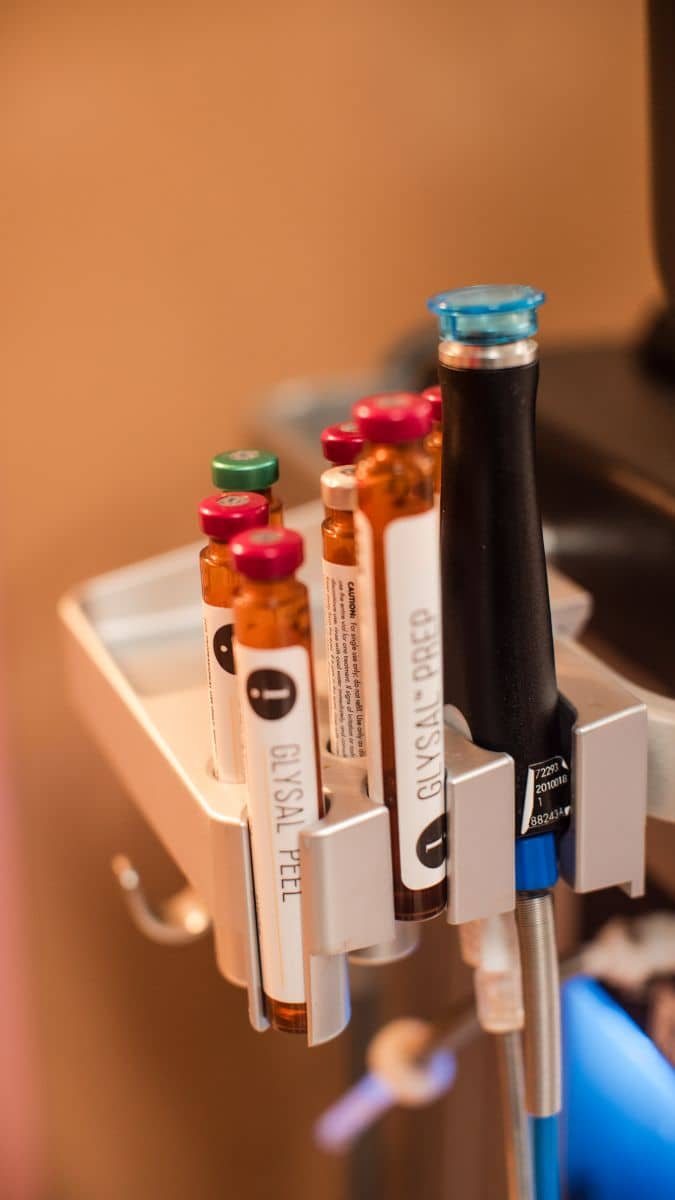
Chemical peels use precise concentrations of acids — glycolic, lactic, salicylic, mandelic, TCA, or blends — to dissolve the bonds between dead skin cells and prompt controlled exfoliation. Depending on the depth, the result ranges from a subtle brightening (light peel, no visible peeling) to a full skin reset (medium peel, several days of flaking).
The mechanism is chemical. We’re using acids to accelerate cellular turnover, fade pigment, and surface fresher skin from beneath.
When to choose microneedling
- Acne scarring (especially boxcar and rolling scars) — microneedling rebuilds the dermis where the scar damage lives.
- Stretch marks, surgical scars, or trauma scars.
- Loss of firmness or early fine lines — collagen induction directly addresses structural decline.
- Enlarged pores — repeated sessions help tighten pore walls.
- You’re comfortable with a series (typically 3 to 6 sessions, spaced 4–6 weeks apart) for maximum effect.
When to choose a chemical peel
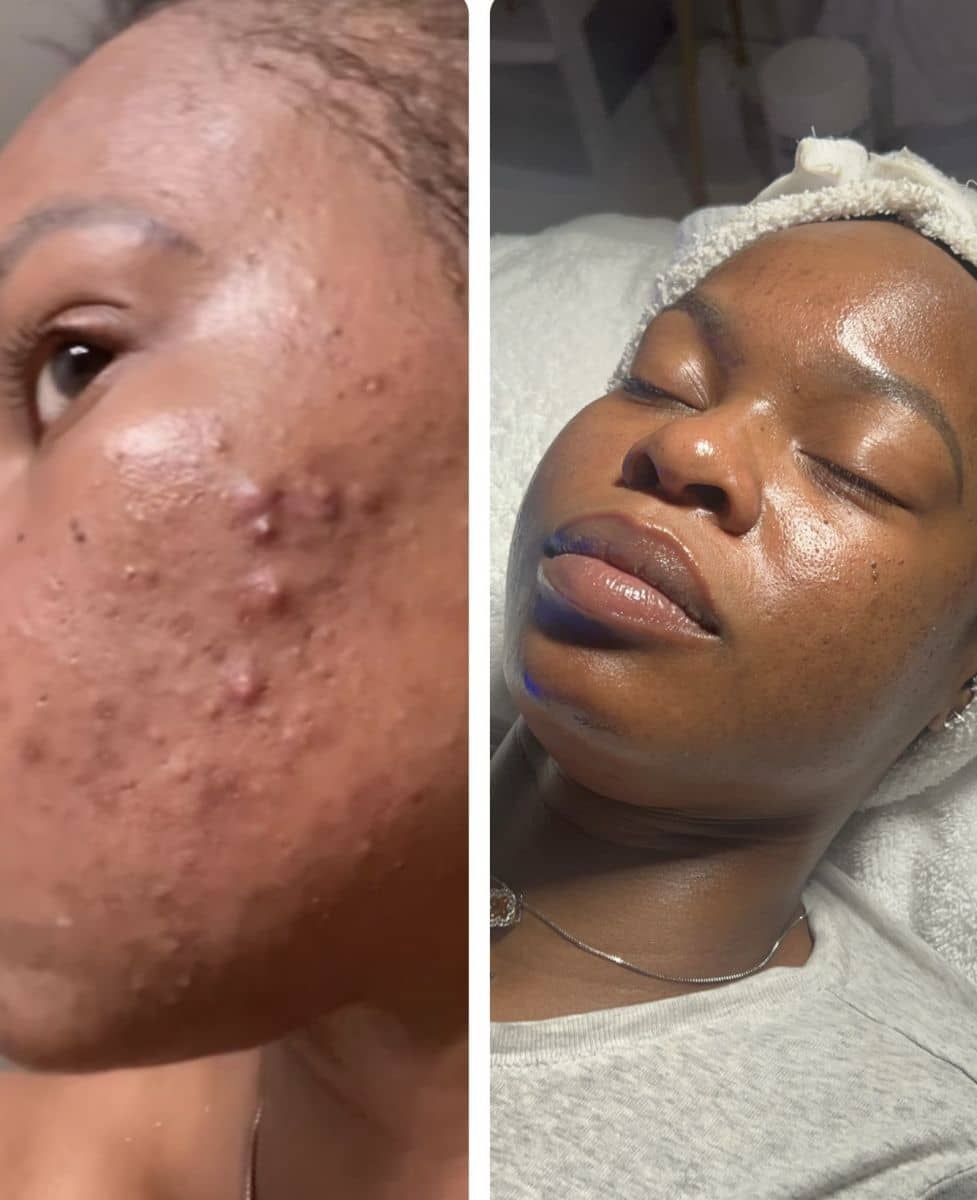
- Hyperpigmentation, melasma, or post-inflammatory marks left behind by acne.
- Dull, uneven skin tone or sun-damaged texture.
- Active congestion or comedones — salicylic-based peels work well here.
- You want a one-time refresh before an event (light peel, no downtime).
- You’re building toward a deeper reset over a series of progressive peels.
Recovery and downtime
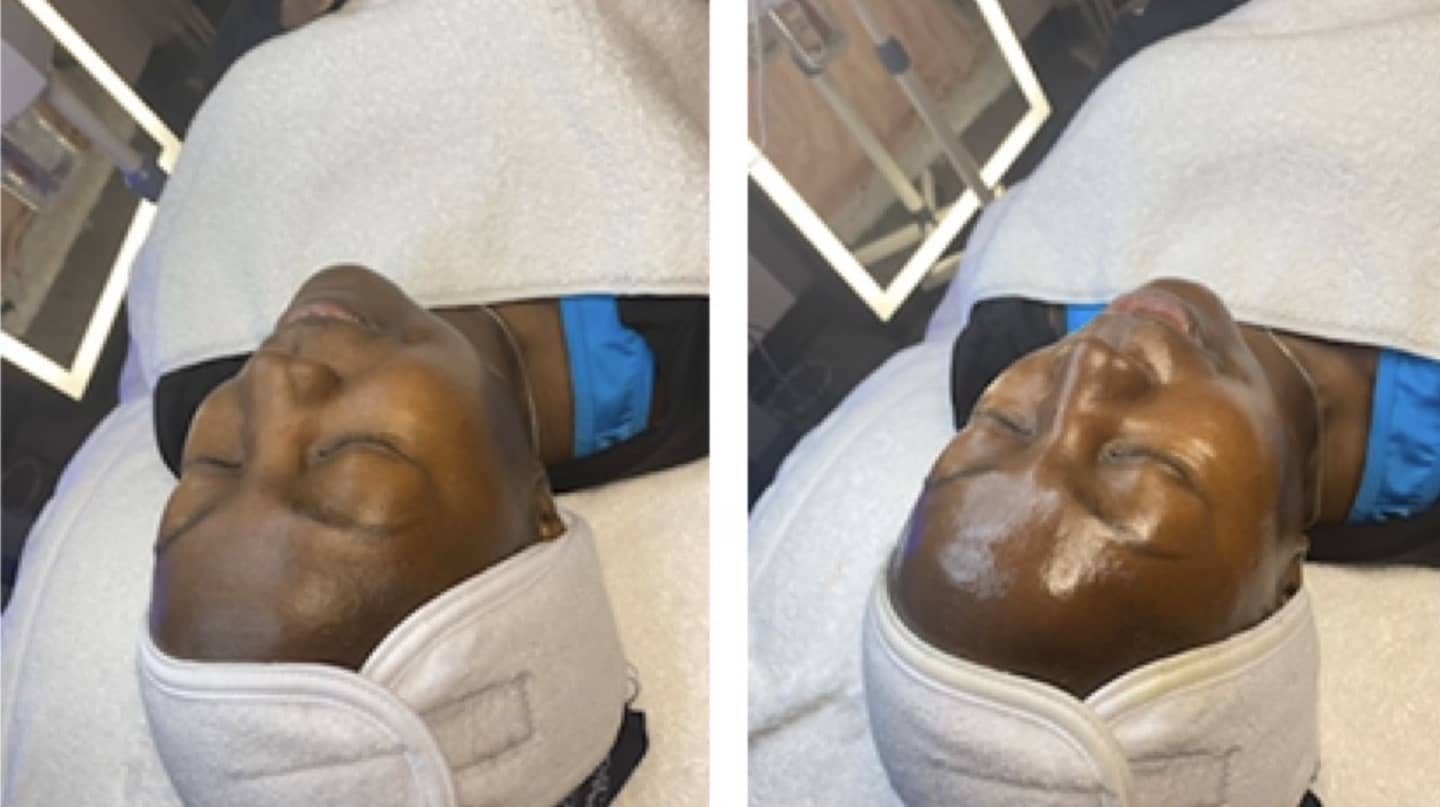
Microneedling: 24–48 hours of redness similar to a light sunburn. Skin feels tight. Most clients are presentable for work the next day with light coverage.
Light chemical peel: minimal to no visible flaking, light redness for a day. Medium peel: 5–7 days of visible peeling and flaking. Plan accordingly.
The combination strategy
For clients with both pigmentation and structural concerns (like acne scars with dark marks), the strongest results come from alternating peels and microneedling over a treatment plan, not picking one. We’ll map this out at your consultation based on your skin’s priority.